

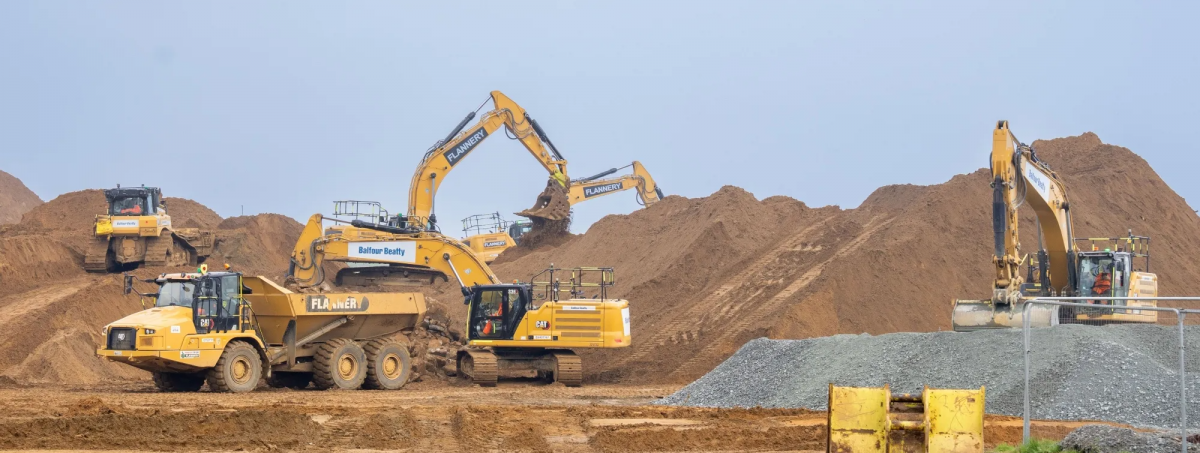
Balfour Beatty has announced plans to add around 2,000 UK jobs by the end of 2027, a hiring drive that signals the country's largest contractor expects sustained infrastructure demand to keep outpacing the workforce it already has.
Balfour Beatty, headquartered in London and founded in 1909, is the UK's largest infrastructure contractor, generating £10.77bn (€12.6bn) in revenue in 2025 across construction, support services and infrastructure investments in the UK, US and Hong Kong.
The recruitment plan will take Balfour Beatty's UK headcount from around 14,000 at the end of 2025 to roughly 16,000 by the end of 2027, a more than 30% increase on the 12,200 employed at the end of 2023, with around half the new roles, some 1,000 positions, filled through apprenticeships, graduate programmes, internships and trainee routes.
The expansion is underpinned by 24% revenue growth in UK Power Transmission in the first half of 2026, a £2.1bn (€2.46bn) order book in that division, and a further identified pipeline worth £6bn to £8bn (€7bn to €9.36bn).
A 30%-plus headcount increase over four years from the country's largest contractor is a direct read on how much UK infrastructure capital spending is expected to convert into delivery, not just a routine hiring update in isolation.
Balfour Beatty already supports employment for some 4 million people through 7,200 UK supply chain partners, of which 64% are SMEs, meaning this hiring plan will pull demand through a wide subcontractor and supplier base rather than staying confined to the main contractor itself.
Apprentices, graduates, interns and trainees already make up around 9% of Balfour Beatty's UK workforce, and are projected to reach roughly 12.7% once this hiring round completes, since around half the new roles are earmarked for early-career routes.
For the sector, a hiring plan this size from a Tier 1 contractor is a leading indicator that Balfour Beatty's supply chain, and competing contractors bidding for the same skilled labour pool, should expect wage and recruitment competition to intensify, particularly in the energy and power transmission trades where the group's own order book growth is concentrated.
Source: New Civil Engineer / Construction News















.png)