

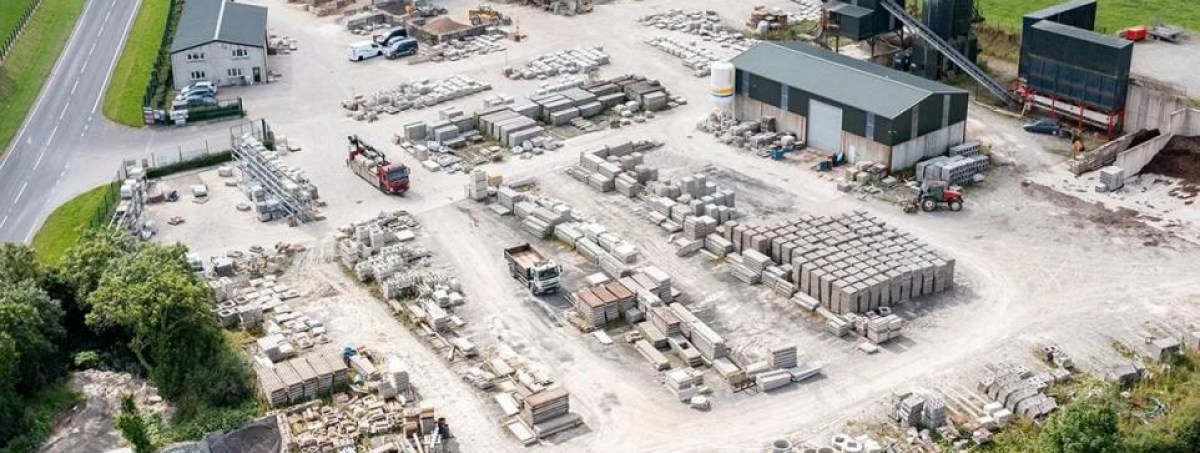
Colton Concrete is looking to grow its team at its County Tyrone precast plant, a hiring drive that reflects steady demand for domestic precast supply across Northern Ireland's construction, water and agricultural sectors, supplying everything from single-farm slurry tanks to major infrastructure schemes.
Colton Concrete, founded in 2005 and based in County Tyrone, is a family-run manufacturer of precast concrete products spanning building components, civils and drainage, watermains, agricultural precast and bespoke concrete solutions, alongside ready-mix concrete.
The company is recruiting across precast production, yard and logistics, driving, joinery and mould-making, quality control, design and drawing office, sales and customer support, and site and management roles, with new recruits typically starting on the shop floor before moving into specialist areas.
Colton Concrete has also invested in covered production bays, a modern batching plant and a large storage and loading yard, which the company says has helped sustain steadier winter production when outdoor building trades typically slow down.
A manufacturer hiring across its full production chain, rather than filling one or two roles, points to genuine, considerable capacity expansion rather than routine staff turnover.
Aecom's Ireland Annual Review 2026 found Northern Ireland construction output at a 15-year high, up 7.3% in the year to June 2025, with infrastructure output up 6.6% and labour costs rising 5.5% as competition for skills intensifies across the sector.
Separate market intelligence notes that water infrastructure and wastewater bottlenecks remain a constraint on Northern Ireland's growth even as contractors' order books stay healthy, a gap that directly affects demand for the watermains chambers and drainage products Colton Concrete manufactures, alongside its civils and agricultural precast ranges.
For the sector, precast manufacturers spanning construction, water and agricultural end markets simultaneously are better placed to keep production lines full when any single sector slows, and firms training staff up from entry level, rather than relying purely on external hires, look increasingly well positioned in a Northern Ireland labour market where skills competition is now pushing costs up across the industry.
Source: Impartial Reporter / The Construction Index / RLB














.png)