

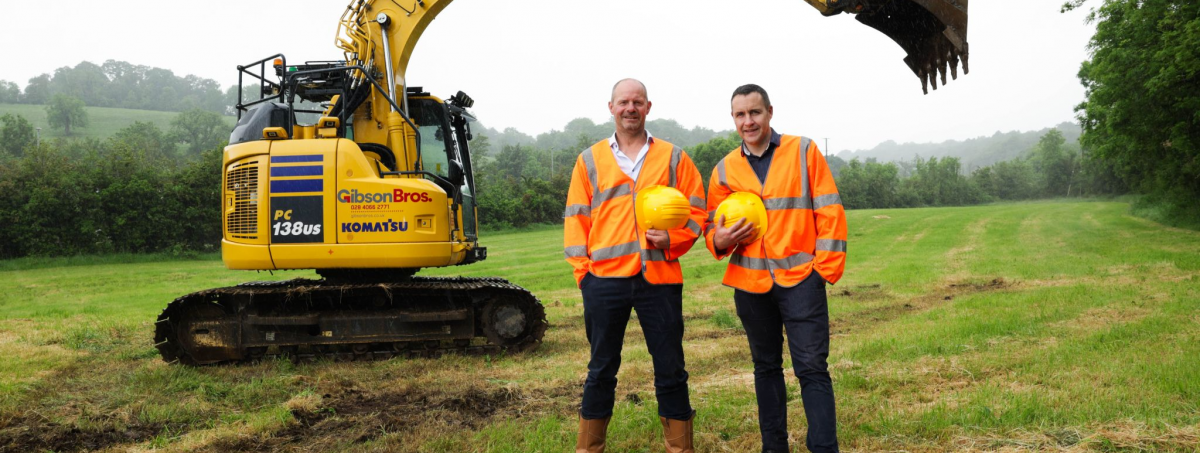
Gibson Bros has broken ground on a new 150-space car park at Game of Thrones Studio Tour in Banbridge, County Down, a three-month civil engineering contract that shows regional contractors picking up steady infrastructure work from Northern Ireland's growing tourism sector, alongside their core quarrying and aggregates business.
Gibson Bros, headquartered in Banbridge, County Down, is a family-owned civil engineering, quarrying and surfacing contractor with more than 70 years in the business, supplying aggregates, concrete blocks and plant hire alongside piling, crane hire and demolition services.
Game of Thrones Studio Tour, which opened in February 2022 on the original filming location near Banbridge, is a privately funded visitor attraction and the world's only official Game of Thrones studio tour.
The project shows how private-sector tourism capital works are becoming a steady, if modest, income stream for regional civil engineering contractors alongside their core quarrying and aggregates business, particularly in County Down where Gibson Bros already operates two of its own quarries.
Visitor numbers at the attraction rose by more than 30 percent in 2023, 35 percent in 2024 and 28 percent in 2025, with the first quarter of 2026 delivering an 82 percent year-on-year increase, the strongest growth recorded to date.
The investment lands amid renewed franchise momentum, with HBO expanding the Game of Thrones universe through the upcoming A Knight of the Seven Kingdoms series and further seasons of House of the Dragon, sustaining demand for the attraction that hosts the original sets.
For Gibson Bros, the contract diversifies its civil engineering pipeline beyond quarrying and aggregates supply into contracted infrastructure work for private tourism-sector clients. For the Studio Tour, removing the off-site shuttle dependency is aimed at converting sustained visitor growth into a more accessible, self-contained attraction.
Almost half of Studio Tour visitors now travel from overseas, a pattern Tourism Northern Ireland links to sustained growth in the region's screen-tourism sector and the wider case for accessibility investment at attraction sites.
For the sector, the signal is narrow but real: Northern Ireland's regional contractors are finding incremental work in tourism infrastructure as visitor attractions compete on accessibility, even where the underlying value is measured in the tens rather than hundreds of millions.
Source: Belfast News Letter











.png)