

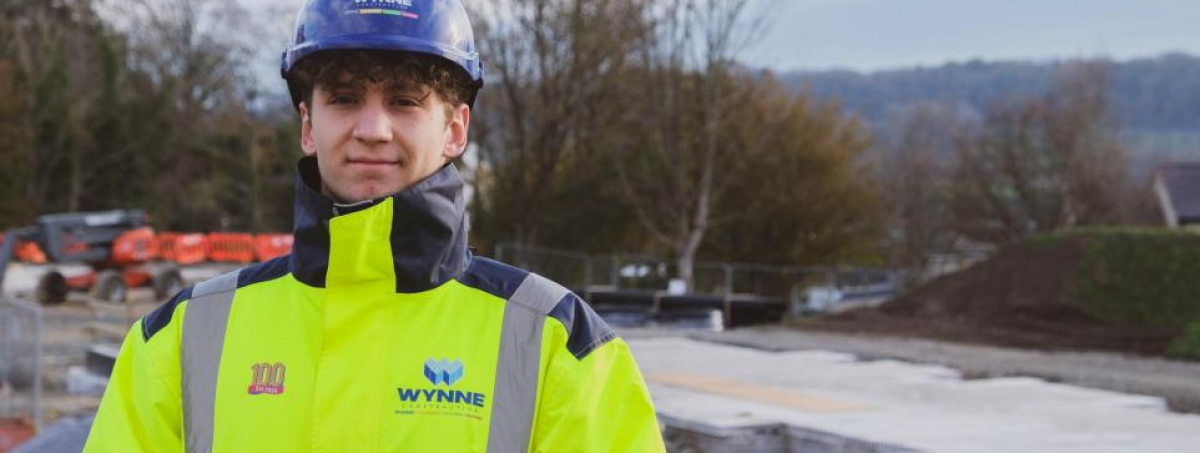
Wynne Construction has welcomed seven recruits across its site-based and design teams, as reported by the Denbighshire Free Press, a hiring round that shows regional contractors adding capacity to deliver a forward workload of more than £325m.
Wynne Construction, a family-owned contractor based in Bodelwyddan, Denbighshire, is in its centenary year and works across education, healthcare, housing and leisure in Wales and the North West of England, according to its announcement.
The company said in July that its order book exceeds £325m (€390m), made up of £228m (€274m) on site and £99m (€119m) of secured schemes in pre-construction, according to Constructing Excellence in Wales.
Design and Bid Manager Peter Fisk brings more than 15 years of architectural practice experience, while Jacek, who joined on a summer placement while studying construction management at Grŵp Llandrillo Menai and Bangor University, was offered a role alongside his studies.
Fisk said in the announcement that he already knew the team from working with Wynne over many years, while Managing Director Chris Wynne said welcoming new people strengthens operations at all levels.
The recruitment fits a national shortage: the CITB’s workforce outlook, as reported by Building, says 41,200 extra workers a year, 206,000 in total, are needed between 2026 and 2030, with growth in infrastructure and public new housing.
Building reported the same outlook forecasts output falling 0.2% in 2026 before growing 1.8% in 2027 and 2.8% in 2028, which makes a £325m (€390m) forward order book unusually valuable for planning resources.
Welsh growth is slower than elsewhere: Onboard Jobs, summarising CITB data, puts average annual output growth at 1.0% in Wales against 1.8% in England.
The Constructing Excellence in Wales write-up added that Wynne’s work includes technically complex public sector projects and frameworks, and that a strong forward order book lets it plan resources and invest in skills and training.
For the sector, a mix of experienced hires and early-career routes, such as converting a placement student into a role, is a practical way to build capacity in a market where recruitment is constrained.














.png)